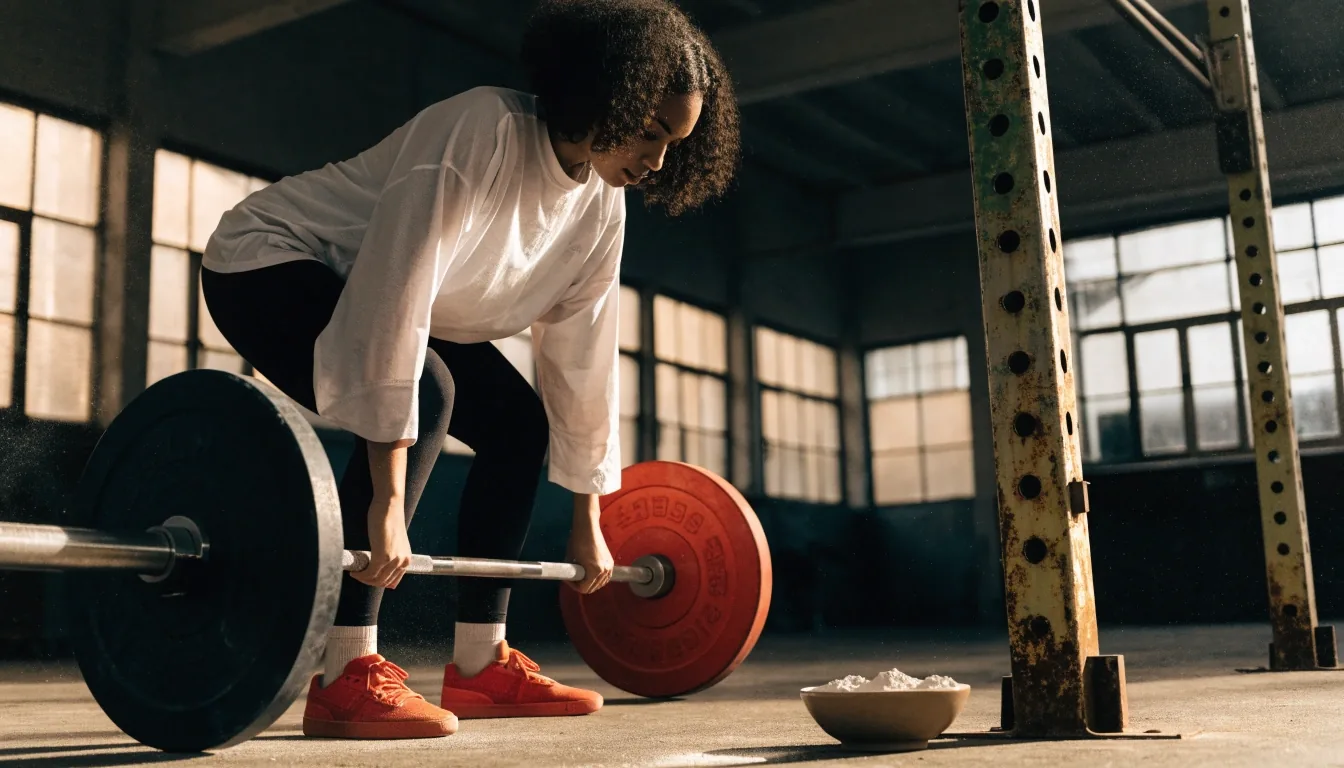
Compound Lifts
Compound lifts worth building a week around
A compound lift trains several joints and muscle groups in one movement. This page works through the overhead press and the bench press in detail, then covers the squat, hinge, and pulling patterns that hold a week together.
What counts as a compound lift
A movement is compound when more than one joint is doing meaningful work. An overhead press bends and straightens the shoulder and elbow while you stabilize the spine. A bench press does similar work while you lie on a bench. A squat moves hips, knees, and ankles together.
An isolation exercise like a biceps curl involves one joint, which is why it appears later in a session rather than at the start. Program the compound work first when you are freshest, then finish with the smaller movements. On most upper-body days that means one press pattern and one pull before any arm work; on lower-body days it means the squat or hinge gets your best attention while you are still fresh.
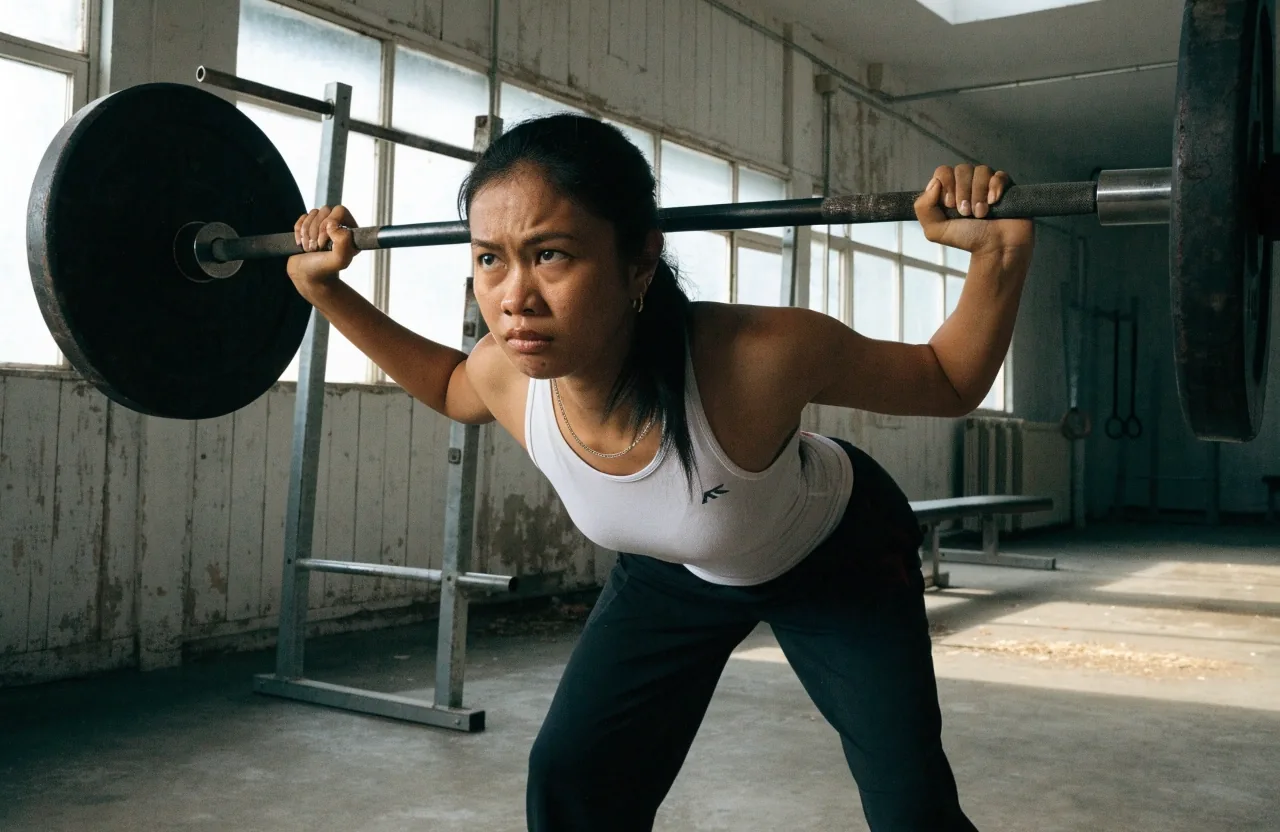
The overhead press: strong shoulders from a standing position
The overhead press is a vertical pressing movement done standing or seated. Standing versions build shoulder and upper-back stability because your trunk has to resist the load, which a seated version doesn't ask of you in the same way.
It is commonly included in minimalist full-body plans because it trains so much at once: shoulders, upper back, triceps, and the trunk holding everything steady.
Cues to keep
- Start with the bar or dumbbells at shoulder height and brace your midsection before the first inch of movement.
- Press overhead without letting your lower back arch to finish the rep.
- Keep the ribs down and the bar path close to your face on the way up.
Overhead press variations and common fixes
Variation one
Standing barbell press
The default version. Both arms move together on one bar, the load is easy to add in small steps, and your trunk does the stabilizing work.
Variation two
Dumbbell press, seated or standing
Dumbbells let each arm work independently, which is useful when one side lags behind the other or when a barbell is not available at home.
If it stalls
Check three things
Whether you are bracing hard enough, whether the bar drifts forward, and whether your upper back is strong enough to hold position. Rows and band pull-aparts help with the last one. Adding a small amount of weight too early is the usual cause of a slow press, so be patient with the increments.
Press and press again, add a row, then repeat next week with slightly more on the bar. That is the whole plan.
The bench press: pressing strength without ego lifting
The bench press is performed lying on a bench with a barbell or dumbbells. It trains the chest, shoulders, and triceps, and it is one of the three competitive powerlifting lifts.
Set your feet, pull your shoulder blades back and down, and keep them there through the rep. Lower the bar with control to a consistent point on your chest, then press back over your shoulders. Do not bounce. If a rep only goes up because you bounced it off your ribcage, it is not a rep you can count for progression.
Same movement, small load increases, honest reps. That is the whole progression rule, and it holds whether you train at a gym with a rack or at home with a set of dumbbells.
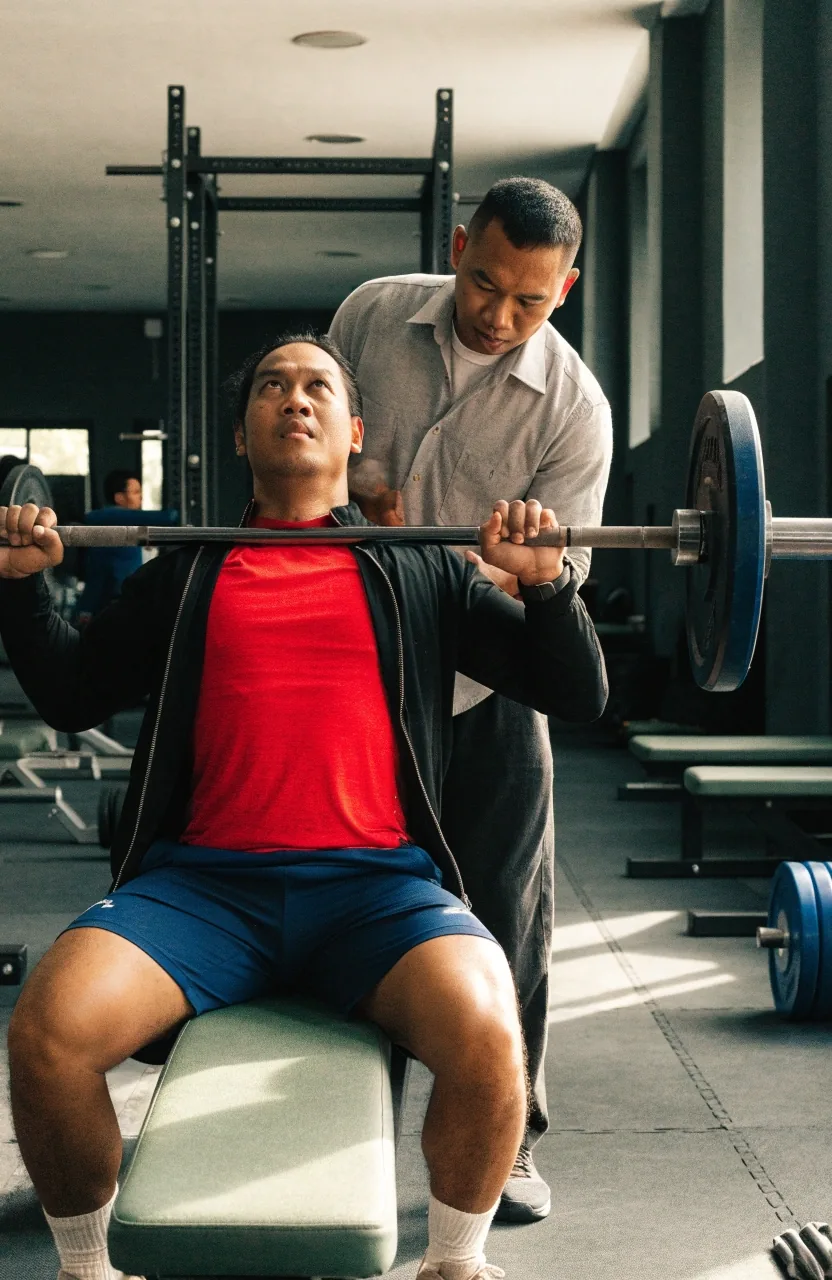
Bench press variations for home and gym
Barbell bench press
With a rack and a bench, set the safeties or spotter arms to catch a failed rep before your first working set. Then progress in small steps.
Floor press
Done lying on the floor with dumbbells. The floor limits range of motion, which some people find easier on the shoulders, and it needs no bench.
Incline press
A bench set at an incline shifts emphasis toward the upper chest and front delts. Whichever you choose, progress the same way: same movement, small load increases, honest reps.
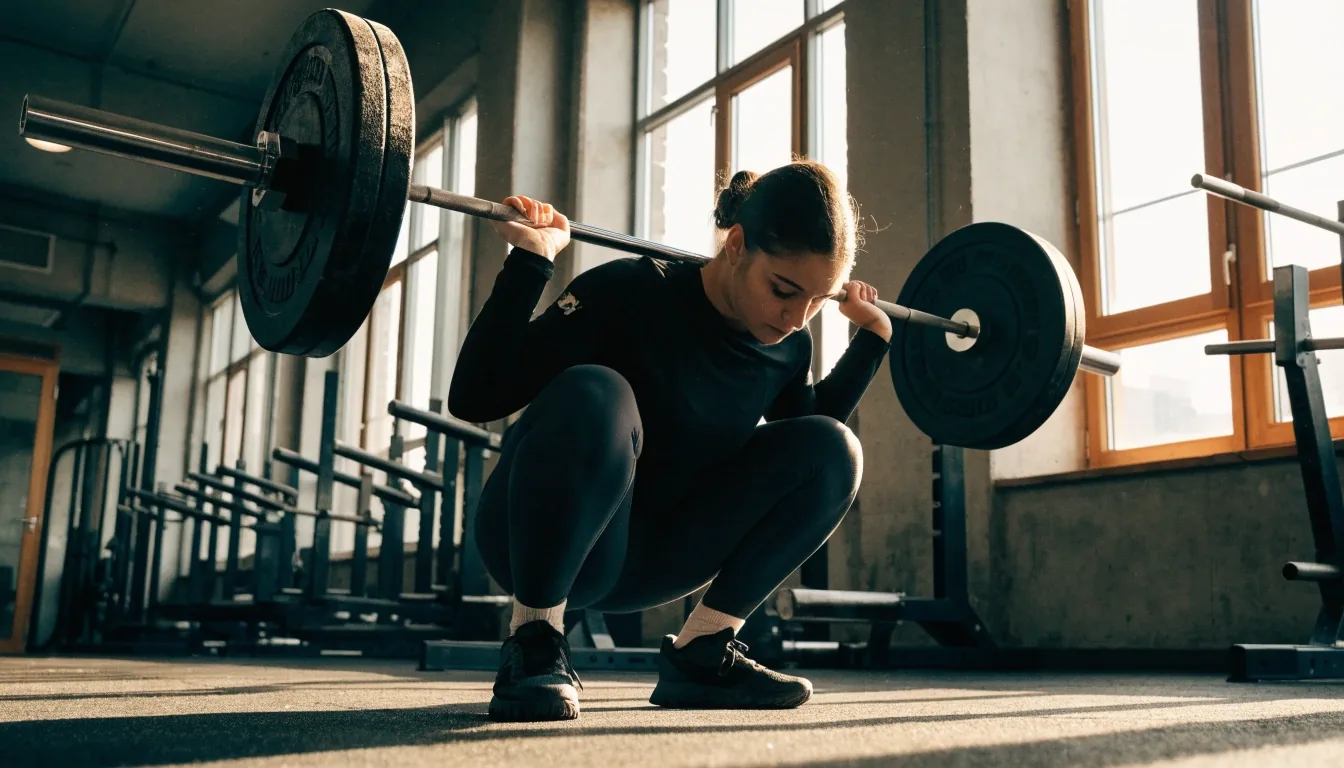
Squat and hinge: the lower-body anchors
Squats and hinges are the two lower-body patterns worth building around. A squat bends and straightens the knees and hips, with the load on your back, in front of you, or held at your chest. A hinge bends at the hips with a relatively upright shin angle: deadlifts and Romanian deadlifts are the classic examples.
Both belong on a lower-body day. People often train one and skip the other, which is why their hamstrings or their quads feel like the weak link. Do both, even if one gets less volume than the other.
Pulling: the pattern people skip
Rows, pull-ups, and band pull-aparts balance out all that pressing. If your week includes bench presses and overhead presses but no rowing or pulling, your shoulders will let you know eventually.
A horizontal row, a vertical pull, and one band-based rear-delt movement cover the bases.
On an upper-body day, arrange the pulling work after the main press.
Put the row or pull-up before the press for a block of weeks until the gap closes.
One row and one pull-up variation is enough to keep the balance right.
Fitting compound lifts into an upper/lower split
An upper-body day might lead with the bench press or overhead press, then a row, then a vertical pull, then one or two smaller movements. A lower-body day might lead with a squat or hinge, then a single-leg variation, then core or carry work. That structure repeats week to week with small load increases. It is not glamorous, and it is easier to progress than a plan that changes every session.
| Lift | Typical day | Main muscles | Common variation |
|---|---|---|---|
| Overhead press | Upper-body | Shoulders, upper back, triceps | Dumbbell press |
| Bench press | Upper-body | Chest, shoulders, triceps | Floor press, incline press |
| Squat | Lower-body | Quads, glutes, trunk | Front squat, goblet squat |
| Hinge | Lower-body | Hamstrings, glutes, back | Romanian deadlift |
| Row | Upper-body | Mid-back, biceps | Dumbbell row, band row |
Questions that come up most
Short answers to the things people ask before they change their training week.
Should I press first or pull first on an upper-body day?
Lead with whichever you want to improve. If pressing is the priority, press first and row after; if your pulling strength is lagging, flip the order for a block of weeks. Keep the session structure the same week to week so you can actually compare.
Can I build these lifts at home with minimal equipment?
Dumbbells cover a lot: a dumbbell press for the shoulders, a floor press or incline press for the chest, goblet squats and Romanian deadlifts for the lower body, and a dumbbell row for the back. Resistance bands fill the rear-delt work that pressing leaves out.
How fast should the load go up?
Slower than most people expect. Add a small amount of weight only after every prescribed rep goes up cleanly with the same technique. Stalling on a press is usually a sign you moved too fast earlier, not that you need more exercises.
Where to go next in the routine
These four lifts do most of the work, and they only pay off inside a plan you can repeat. Read the training principles next for how load and volume fit together, plan a deload week before the next heavy block, or look at the home-training options if you train outside a gym.
Hormone Strength runs on Jl. Braga No. 12, Sumur Bandung, Kota Bandung, Jawa Barat, 40111, and answers questions by phone at +62 22 424 8714 and email at [email protected], Monday to Friday, 09:00–18:00.