
Recovery & deload
Recovery, deload weeks, and training that lasts
Recovery is where training turns into progress. If you keep adding work without ever backing off, performance flattens, sleep suffers, and motivation drops. This page covers the deload week, how to run one, and how cycle-aware training can help when a fixed plan stops matching how you feel. It also covers the everyday basics of sleep and food, because no program compensates for missing those.
Why fatigue accumulates
Every hard session borrows from the next one
Each session adds stress, and the body rebuilds during the hours after. When sessions pile up faster than recovery, performance stops improving even if the training looks the same on paper. The early signs are mundane: the same weights feel heavier, warm-up sets feel like work sets, and you are less interested in training. These are not character flaws. They are signals that the stress and recovery balance has tipped. Recognizing them early is what keeps a program running for months rather than weeks.
-
Loads get heavier
Numbers you owned last month start to drag on the third set.
-
Warm-ups feel like work
The empty-bar sets that usually loosen you up start to cost something.
-
Interest drops
You start negotiating with yourself about going to the gym at all.
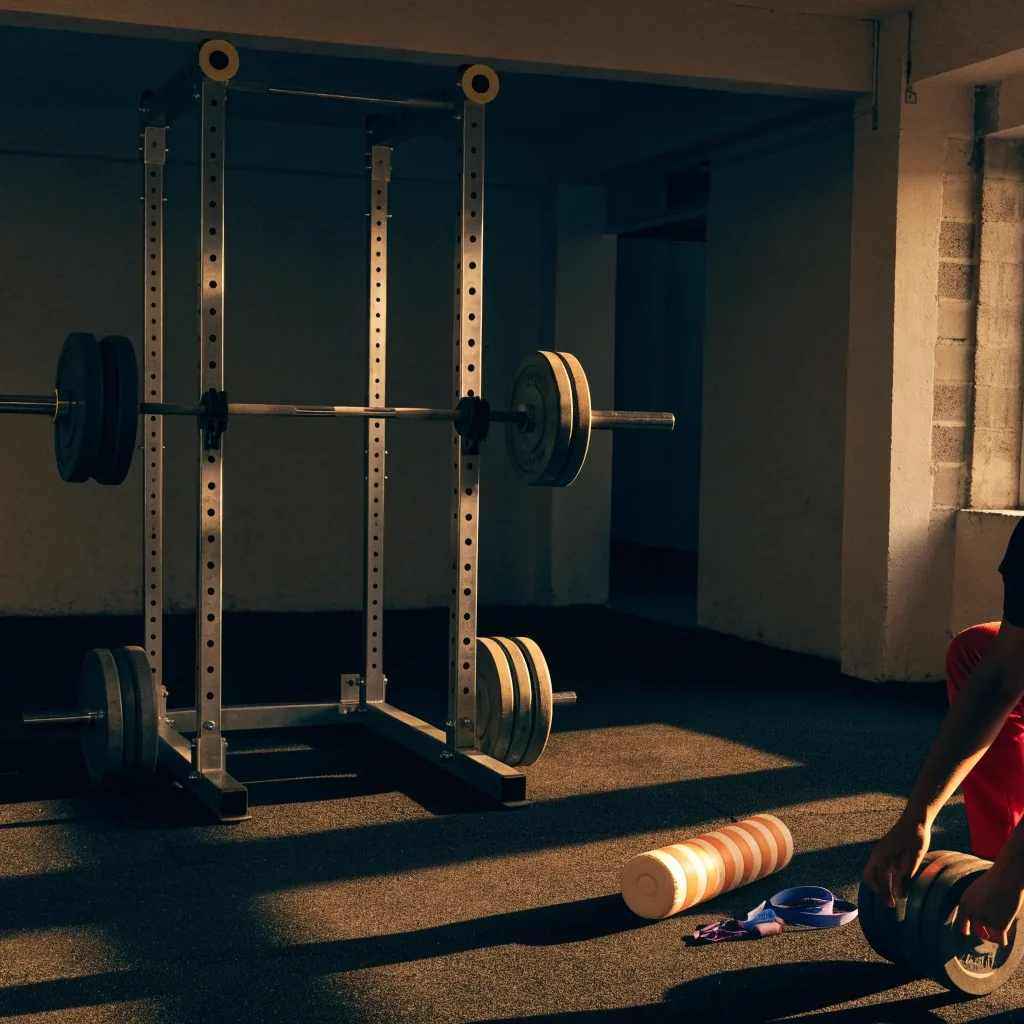
A deload is not a week off. It is a lighter week that keeps the habit and lets accumulated fatigue clear.
Planned reduction in training stress
What a deload week actually is
A deload week is a planned reduction in training stress. It can lower volume, intensity, or both, and it is common practice in strength and endurance coaching. Reducing volume usually means fewer sets at similar loads. Reducing intensity means lighter loads at similar set counts. Either approach works; the wrong version is skipping the deload because you feel fine right up until you don't.
A week off is sometimes the honest answer, but it is a different tool. The deload keeps you in the room with a lighter bar.
Lower the volume
Cut sets, keep the loads close to normal. Four sets of squats become two. Same bar, less total work.
Lower the intensity
Keep the set count, drop the weight. The bar moves fast and clean, and technique gets the attention.
Both at once
For a rough stretch, trim sets and loads together. It feels easy on purpose, and that is the point.
The version that fails
Skipping it because nothing hurts yet. Fatigue does not announce itself before it lands.
How to run a deload you will actually do
The simplest version: keep the same exercises, cut sets by about half, and keep the loads moderate. If you were doing four sets of squats, do two. If your press felt heavy, drop the weight slightly and move well. Keep the same schedule so the routine doesn't break.
4–8
weeks between deloads for most people who train hard and recover reasonably well
Half
the set count is the easiest dial to turn first, before touching the loads
Beginners can often go longer between deloads because their loads are lighter and the stress per session is lower. Experienced lifters usually need them more often, not less — the heavier the bar, the more the recovery bill comes due. Keep the session on the calendar even on the light week so the habit survives the easy stretch.
If a full week feels like too much, run a lighter three-session stretch and reassess. Consistency matters more than the label you put on it.

Cycle-aware training: adapting load across the month
Cycle-aware training adjusts weekly load based on how you feel across the menstrual cycle rather than forcing identical sessions every week. The common pattern is heavier or higher-volume work when energy is good and lighter, more technical work when it isn't. This is a planning tool, not a rulebook.
Some people notice clear changes across the month; others notice almost none. If you do track it, use a simple note: energy, sleep, and how the session felt. After two or three months you will have a pattern worth acting on. Nothing changes for the person who does not track it — you just move on feel instead of records.
A note that takes ten seconds
- Energy — how the first working set felt compared with last week.
- Sleep — roughly how many hours, and whether it felt solid or broken.
- Session feel — one or two words is plenty.
Sleep, food, and the boring parts that matter
No program outruns poor sleep. If you are sleeping five or six hours a night and training hard, you are borrowing against future sessions.
-
Bedtime
Aim for a consistent bedtime, keep the room dark, and treat a caffeine cutoff as part of training rather than a personal rule you negotiate daily. Same time most nights beats an ideal schedule that shifts every day.
-
Protein
Enough protein and enough total calories support recovery and training quality. You do not need a precise number to see the difference. Include a source at most meals and stop treating food as a reward for hard sessions.
-
Total intake
Avoid long stretches of under-eating while training hard. Eat regularly, keep meals boringly repeatable when life is busy, and do not try to out-train a week of skipped meals.
Managing volume when life gets busy
Busy weeks are the norm, not the exception. When time is short, cut sets before you cut exercises. Keeping the same movements with fewer sets maintains the skill and most of the training stimulus, while dropping exercises entirely breaks the routine.
The goal during a busy stretch is to stay in the habit, not to set records. A short session done consistently is worth more than a perfect session you skip.
45 min
Main lifts with full set counts. Treat it as a normal session in a shorter window.
30 min
Do the main lifts and skip the accessories. Two or three sets each, no rush between them.
20 min
Do the first lift properly and stop. It still counts, and next week starts where you left off.

Reading your own fatigue signals
Track a few simple things and the signals become obvious. Resting heart rate, sleep quality, mood, and how the first working set feels are enough. Two or three of them trending badly at once usually means it is time for a lighter week. One bad session means very little; training is noisy day to day.
Watch the trend across a week, not the single data point. This is not precision science, and it does not need to be. It just needs to be more honest than "I feel fine."
Resting heart rate
A few beats above your usual morning number, sustained, is worth noting.
Sleep quality
Waking often, or waking before the alarm, shows up before your weights do.
Mood
Short patience with small things is training data, not a personal failure.
First working set
If the opener always feels heavy, the rest of the week will too.
Recovery and hormonal balance: realistic expectations
Strength training supports your body's ability to use energy, build and keep muscle, and manage daily stress, and recovery is what lets those adaptations happen. It does not fix a hormonal issue, and we don't claim that.
If something feels persistently off — sleep, appetite, mood, or energy across weeks — that is a conversation for a qualified professional, not a training article. What this site can offer is a sensible training and recovery structure that gives your body the conditions to respond well. That is a useful contribution and an honest one.
Everything on this page is training guidance for healthy adults, not a substitute for care from someone who can look at your own situation properly.
Where to go next
Recovery works best on top of a program that is already sensible. If you are still choosing your structure, start with the principles behind it.
Prefer to ask a question first? Email [email protected] or reach the editors through the contact page.
Questions we get about deloads
Short answers to the things people ask before their first lighter week. If your question is not here, the contact page reaches the people who write this material.
How do I know it is time for a deload?
Two or three fatigue signals trending the same way for a week, or a schedule you have been running hard for four to eight weeks without a lighter stretch. One flat session is not a signal.
Should I deload on the same exercises?
Yes. Keeping the same movements preserves the skill you have built. Change the sets or the loads, not the exercise list.
What if I cannot train at all that week?
Then rest, and come back at a normal week rather than trying to make up the missed sessions. Doubling the next week is how a light week turns into a stall.
Does cycle-aware training mean changing my whole program?
No. Keep the structure and move the intensity or volume within the week. It is a scheduling adjustment, not a new plan.
Can I keep training hard if I sleep well and eat enough?
Often yes, and more often than someone with poor sleep habits. That does not remove the need for a lighter week eventually — it just moves the date further out.

Plan the light week, then get back to work
Recovery is not the opposite of hard training. It is the part that keeps hard training possible. Put a deload on the calendar before you need one, keep the session on the schedule, and use a cycle-aware note if it helps you plan the month.
Hormone Strength · Jl. Braga No. 12, Sumur Bandung, Kota Bandung, Jawa Barat, 40111 · +62 22 424 8714 · Monday to Friday, 09:00–18:00